Confirm Your Name Before the Letter Goes Out (From American Alternative)
Summary
- Paramount Skydance has enhanced its tender offer with a ticking fee that increases the payout for every quarter the deal is delayed by regulators.
- The hostile bid from Paramount offers a significant premium over the current board-recommended agreement with streaming giant Netflix.
- The new proposal includes a commitment to cover the termination fee Warner Bros. Discovery would owe if it breaks its existing contract.
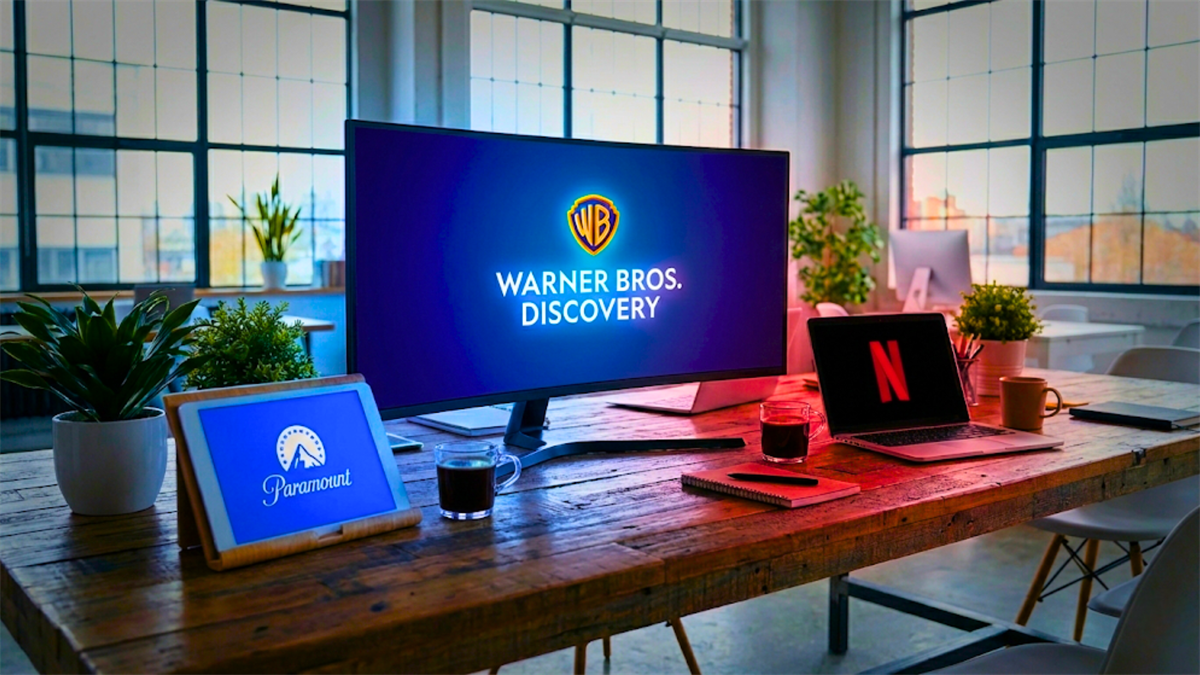
Warner Bros. Discovery (NASDAQ: WBD) is currently the most-watched stock on Wall Street. After spending much of the last two years trading in the single digits, the entertainment sector giant has staged a recovery. As we enter the middle of February, shares are hovering near $28. This resurgence is not due to a sudden spike in movie ticket sales or streaming subscribers, but rather a high-stakes bidding war between two industry titans.
On one side of the table sits Netflix (NASDAQ: NFLX), the streaming king. They have a signed, Board-recommended agreement to acquire Warner Bros. Discovery (WBD) for $27.75 per share in an all-cash deal. It is the safe option that the Board prefers. On the other side stands the newly formed Paramount Skydance (NASDAQ: PSKY). They have launched a hostile tender offer, appealing directly to shareholders, at $30 per share.
Until yesterday, the WBD Board argued that this offer was too risky to consider due to regulatory concerns. However, the dynamic shifted dramatically on Feb. 10. Paramount Skydance officially amended its offer. While they did not raise the $30 headline price, they introduced a complex set of financial incentives designed to neutralize the Board's concerns. These new terms act as an insurance policy for investors, potentially changing the calculus for anyone holding WBD stock. Paramount is no longer just offering more money; it is offering better terms to ensure that the money actually reaches shareholders' pockets.
[How To] Invest Pre-IPO In SpaceX With $100! (Ad)
For the first time ever, James Altucher – one of America’s top venture capitalists – is sharing how ANYONE can get a pre-IPO stake in SpaceX… with as little as $100!
Ticking Fees: How Paramount Plans to Win
Paramount’s updated offer is a direct response to the fear of regulatory delays. In major media mergers, the Department of Justice often conducts lengthy antitrust reviews that can drag on for eighteen months or more. The WBD Board has cited this potential delay as a primary reason for rejecting Paramount. To counter this, Paramount has introduced a concept known as a ticking fee.
This mechanism is the most significant addition for retail investors. Paramount has agreed that if the merger does not close by Dec. 31, 2026, the purchase price will increase automatically. Specifically, Paramount will pay an additional 25 cents per share for every quarter the deal is delayed. This effectively acts as an insurance policy, shifting the financial risk of a government delay from the shareholder to the buyer. If the government drags its feet, the final purchase price goes up.
Furthermore, Paramount addressed the massive financial penalty that had been hanging over the negotiations. Currently, WBD is contractually tied to Netflix. If WBD breaks that contract to sell to Paramount instead, it would owe Netflix a $2.8 billion termination fee. This debt has been a major deterrent for the WBD Board. In a bold strategic move, Paramount has legally committed to paying this $2.8 billion fee on WBD's behalf. This effectively gives the WBD Board a get-out-of-jail-free card, allowing them to switch buyers without damaging Warner Bros. Discovery’s balance sheet.
$27.75 vs. $30: An 8% Instant Premium
At first glance, the difference between the offers might seem small, just $2.25 per share. However, percentages matter more than raw dollars. The Paramount offer of $30 represents an approximately 8% premium over the Netflix offer of $27.75.
To put this in perspective, consider a hypothetical investor holding 1,000 shares of Warner Bros. Discovery. If they accept the safe Netflix deal, they would receive a gross payout of $27,750. However, if the Paramount deal succeeds, that same investor receives $30,000. That is an extra $2,250 in profit for simply choosing a different buyer.
The ticking fee creates even more potential upside. If antitrust regulators delay approval until June 2027, the purchase price would theoretically rise to $30.50 per share. While most investors prefer a quick close, this mechanism ensures capital is not idle while waiting for the closing date. Paramount is effectively betting its own capital that it can get the deal done. This structure turns time into money, ensuring that the longer the government takes to review the deal, the richer the payout becomes for the common shareholder.
The Crash Has Already Started (Most Just Don’t See It Yet) (Ad)
The same seven red flags that preceded the 1929 crash, ’70s stagflation, and the 2008 meltdown are all flashing together right now — long before the headlines catch up. Our free Bellwether Signal Report breaks down each warning in plain language and explains why more Americans are shifting from vulnerable paper assets into hard assets like gold and silver IRAs. If you want to stay ahead of the next major market turn, now is the time to act.
Claim your free Bellwether Signal Report before the next leg down
The Arbitrage Spread: Why WBD Isn't $30 Yet
If the Paramount offer is a guaranteed $30 cash bid, investors might wonder why Warner Bros. Discovery stock is trading at around $28. This price gap is known as the arbitrage spread. In merger scenarios, a stock rarely trades at the full offer price until the deal is 100% sealed. The remaining gap represents risk.
The market currently treats the Netflix offer of $27.75 as a solid floor. The stock is unlikely to drop below this price because a signed contract is in place. However, the fact that WBD is trading above $27.75 is a bullish signal. It suggests that institutional investors, hedge funds and mutual funds are starting to bet that the Paramount deal might actually happen.
If the market believed the Paramount deal was impossible, the stock would trade exactly at $27.75. Every cent it trades above that number represents growing confidence in the hostile bid. Volume on WBD has remained high, indicating that smart money is positioning for a resolution. The spread is narrowing, which typically means Wall Street is becoming more comfortable with the regulatory risks involved in a Paramount takeover.
What Happens Next? Critical Moments for WBD Investors
The battle is far from over, and volatility is expected to continue. Shareholders need to watch three specific dates that could trigger sharp movements in the stock price.
First, Warner Bros. Discovery will report its Q4 2025 earnings on Feb. 26. A strong earnings report could be the final nail in the coffin for the lower-priced Netflix deal. If WBD shows it is growing without help, shareholders may demand the full $30 premium from Paramount.
Second, the current Paramount tender offer expires on March 2, 2026. Unless it is extended again, this is the deadline for shareholders to tender their shares directly to Paramount, effectively bypassing the WBD Board. Finally, a shareholder vote on the original Netflix merger is expected in April 2026.
The Floor Is Safe, the Ceiling Is Higher
Warner Bros. Discovery shareholders find themselves in an enviable position. The downside risk is capped by the Netflix agreement, providing a safety net that did not exist a year ago. Now, with Paramount’s introduction of ticking fees and debt backstops, the upside potential is structurally protected.
Paramount has signaled its willingness to pay for deal certainty. By removing the termination fee penalty and insuring against regulatory delays, they have removed the logical barriers to accepting their higher bid. For investors, the choice is now between a good return from Netflix and a superior return from Paramount, a dilemma most are happy to have.
Read More
- Williams Companies Stock Climbs as Investors Focus on Gas Demand
- How the Rich Retire (From The Oxford Club)
- AI Power Crunch: Why Bloom Energy Is the Hidden Winner
- [URGENT] Independent analyst just valued this Nasdaq biotech’s lead drug at $1 BILLION (From The Financial Newsletter)
- AI Disruption Overblown! 4 Software Stocks to Buy on the Dip
- Onsemi Is Near a Breakout—And Free Cash Flow Could Fuel It
- No Rally? Coca-Cola’s Results Still Look Like a Sweet Deal
Stay Ahead of the Market
The best investment opportunities don't wait. Get our research and stock ideas delivered straight to your smartphone—so you never miss a market-moving opportunity. Our text alerts ensure you see timely stock ideas and professional research reports instantly, whether you're in a meeting, commuting, or away from your desk.


