Someone just spent $236,000,000 on a painting. Here’s why it matters for your wallet.

The WSJ just reported the highest price ever paid for modern art at auction.
While equities, gold, bitcoin hover near highs, the art market is showing signs of early recovery after one of the longest downturns since the 1990s.
Here’s where it gets interesting→
Each investing environment is unique, but after the dot com crash, contemporary and post-war art grew ~24% a year for a decade, and after 2008, it grew ~11% annually for 12 years.*
Overall, the segment has outpaced the S&P by 15 percent with near-zero correlation from 1995 to 2025.
Now, Masterworks lets you invest in shares of artworks featuring legends like Banksy, Basquiat, and Picasso. Since 2019, investors have deployed $1.25 billion across 500+ artworks.
Masterworks has sold 25 works with net annualized returns like 14.6%, 17.6%, and 17.8%.
Shares can sell quickly, but my subscribers skip the waitlist:
*Per Masterworks data. Investing involves risk. Past performance not indicative of future returns. Important Reg A disclosures: masterworks.com/cd
Early The Safest Investment Right Now? (It’s NOT Gold) (From Weiss Ratings)
Key Points
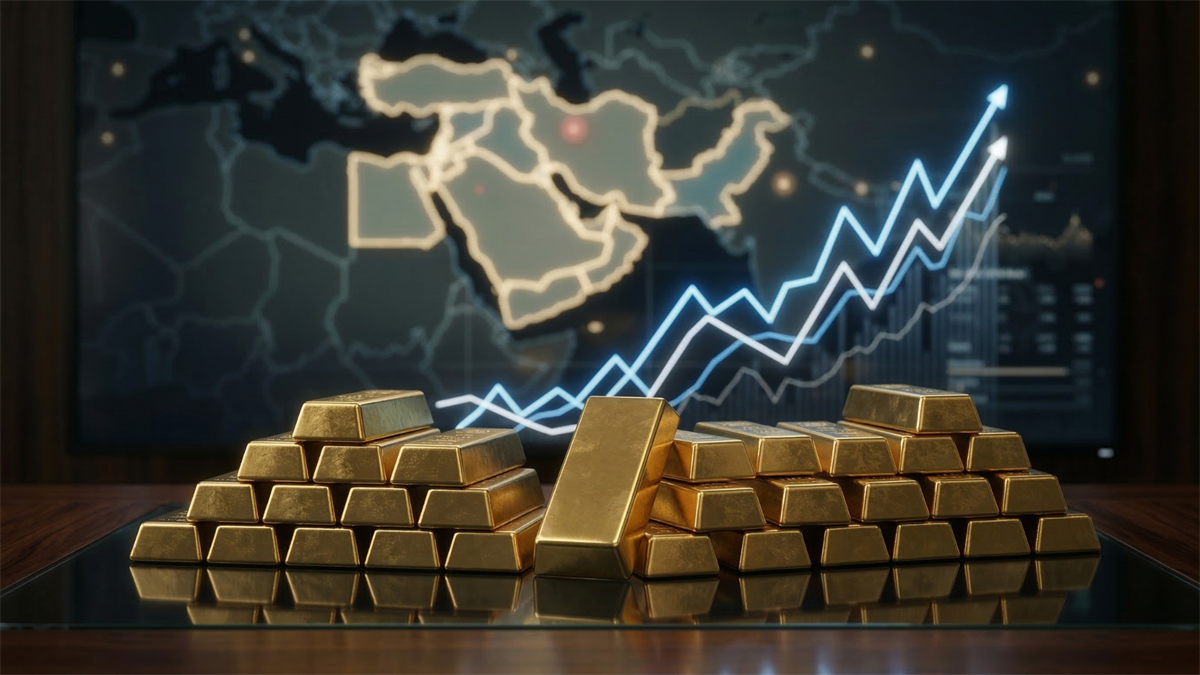
- Gold prices spiked and then dipped early in the Iran war, and continued volatility may give investors an opportunity to enter after the sustained rally over the past several quarters.
- GLD and GLDM are accessible, easy-to-use options allowing investors to adapt to fast-changing news with quick trades without running the risk of contango for futures investors.
- GDX could have an advantage because of the momentum of gold mining companies, which may be able to outperform gold when they experience strong fundamental success.
- Special Report: These guys act like this is big news… I called it (From Golden Portfolio)
Nearly two weeks in, the ongoing war in Iran offers investors some confusing signals that may make it tough to predict how different assets and asset classes might respond. Airline stocks, unsurprisingly, have taken a tumble, but other industries have been less dramatically affected. The whole S&P 500 has only dropped by 2.3% in the last month, a modest decline given high levels of geopolitical uncertainty.
Volatile environments often lead investors to fall back on gold, but with prices of the metal up nearly 80% in the last year, it's unclear how much upside potential there is for the traditional safe-haven asset. On the other hand, the market shock from the start of the war did cause a brief—though modest—spike above $5,300 per ounce, and gold has subsequently fallen about 2% in recent days.
If the dollar declines as a result of the war, pushing gold in the opposite direction, investors may have a narrow window in which to buy at a marginally reduced price. Perhaps more likely, broad volatility across all corners of the market may open up opportunities to buy gold or gold stocks during short-lived dips for those who are watching closely. Alternatively, investors might try the following plays on gold during the war in the Middle East.
They don't want you reading this (Ad)
In 1934, the government executed a legal maneuver that transferred billions in wealth overnight—most Americans had no idea it was coming, a small group who saw it early walked away wealthy, and everyone else paid for it. Trump has the same legal authority today, advisors close to the administration believe he's considering using it, and if he does, the transfer happens fast with the window to be on the right side of it already closing.
Get the free report on how to position yourself now
GLD Remains a Straightforward, Accessible Play For All Investors
Gold futures and bullion have advantages for investors looking for leverage or pure hedges, but a trader anticipating volatility related to the war to last for weeks or months may be looking for something liquid and accessible. It's hard to do better than the SPDR Gold Trust (NYSEARCA: GLD), the largest and most popular gold-based exchange-traded fund (ETF) in the world.
The fund closely tracks the spot price of gold because its holdings are just that—physical bullion stored in vaults. Because it trades like a stock, investors can buy and sell the fund quickly during market hours to respond in real time to developments.
It also has the benefit over gold futures of eliminating concerns about contango, where futures prices are higher the further out the contract expires, which is a real possibility given the historical rally and recent volatility.
One consideration for investors considering GLD is that it is not the cheapest physically backed gold ETF, with an expense ratio of 0.4%. There may be alternatives where investors can accept lower assets under management (AUM), trading volume, or different bullion storage arrangements for a slightly lower fee.
Momentum For Gold Mining Companies, But Oil Cost Concerns Could Impede GDX Performance
The VanEck Gold Miners ETF (NYSEARCA: GDX), holding a portfolio of gold mining companies rather than gold itself, may appeal because of the potential for improvements in operational leverage should the price of gold continue to rise during the war.
Many gold mining companies have come off exceptional quarters in 2025 thanks to the dramatic rally, which assisted in bolstering balance sheets and driving dividend growth (GDX itself provides a dividend yield of 0.61%.) GDX holds about 50 mining stocks, boosting diversification beyond what most investors would target on their own.
Interestingly, though, GDX shares have fallen by more than 4% in early March, a decently sized underperformance relative to the spot price of gold over the same period.
This deviation from the price of gold itself may be due to concerns about rising oil prices. Surging oil prices mean that gold miners will have to spend more just to keep production up, cutting into margins. GDX may be strongest if gold prices rise while oil prices remain unchanged or rise only marginally.
Trump Planning to Use Public Law 63-43: Prepare Now (Ad)
A little-known U.S. law is back in focus as analysts examine how existing presidential authorities could influence markets in 2026 and beyond.
In a new briefing, a former government advisor explains the historical context behind this statute, why it’s being discussed again, and how certain policy actions could reshape capital flows during America’s upcoming 250th anniversary period. The presentation focuses on preparedness, macro implications, and what investors may want to understand as events develop.
GLDM Provides a Cheaper Alternative to GLD, Though Limitations Remain
If the strategy of GLD appeals but its cost is prohibitively high (or investors are concerned about underperformance compared to cheaper rivals for that reason), the SPDR Gold MiniShares Trust (NYSEARCA: GLDM) may be a suitable alternative.
A smaller physical gold-focused fund—not only in terms of AUM and trading volumes, but also with a per-share price that is lower, improving accessibility for retail investors—GLDM also has an expense ratio just a quarter of its sibling's.
Investors seeking the most liquid physical gold fund will probably want to stick with GLD, but GLDM can actually outperform for those buying and holding, thanks to its lower fee.
Of course, GLDM also offers no leverage, as is the case with gold mining firms like GDX (which can outperform gold itself when miner profits surge), so it may come down to individual strategy and preference.
Featured Stories
- The Real Reason Eli Lilly Is Pouring $3 Billion Into China
- Skip Headlines Straight to Original Research (From American Market News)
- Why Upstart’s Bank Charter Bet Could Change Everything
- The table went quiet… [my meeting with Tether Gold] (From Golden Portfolio)
- Broadcom’s AI Momentum Could Be Far From Over
- 3 Stocks Betting Big on Prediction Markets This March Madness
- AEHR Keeps Winning: Up +100% With Memory Chip Deal Potential
Stay Ahead of the Market
The best investment opportunities don't wait. Get our research and stock ideas delivered straight to your smartphone—so you never miss a market-moving opportunity. Our text alerts ensure you see timely stock ideas and professional research reports instantly, whether you're in a meeting, commuting, or away from your desk.


