BNZI Breakout Watch: AI Growth Meets Turnaround Setup! (From Huge Alerts)
Key Points
- Berkshire Hathaway made an unexpected move in Q1 2026 under new CEO Greg Abel, buying into Macy's stock.
- Macy's shares have taken a huge tumble since their peak 11 years ago, losing around half of their value.
- However, Macy's latest results show a company in recovery, with the firm posting a giant beat on adjusted earnings per share.
- Special Report: ALERT: Drop these 5 stocks before the market opens tomorrow! (From Weiss Ratings)
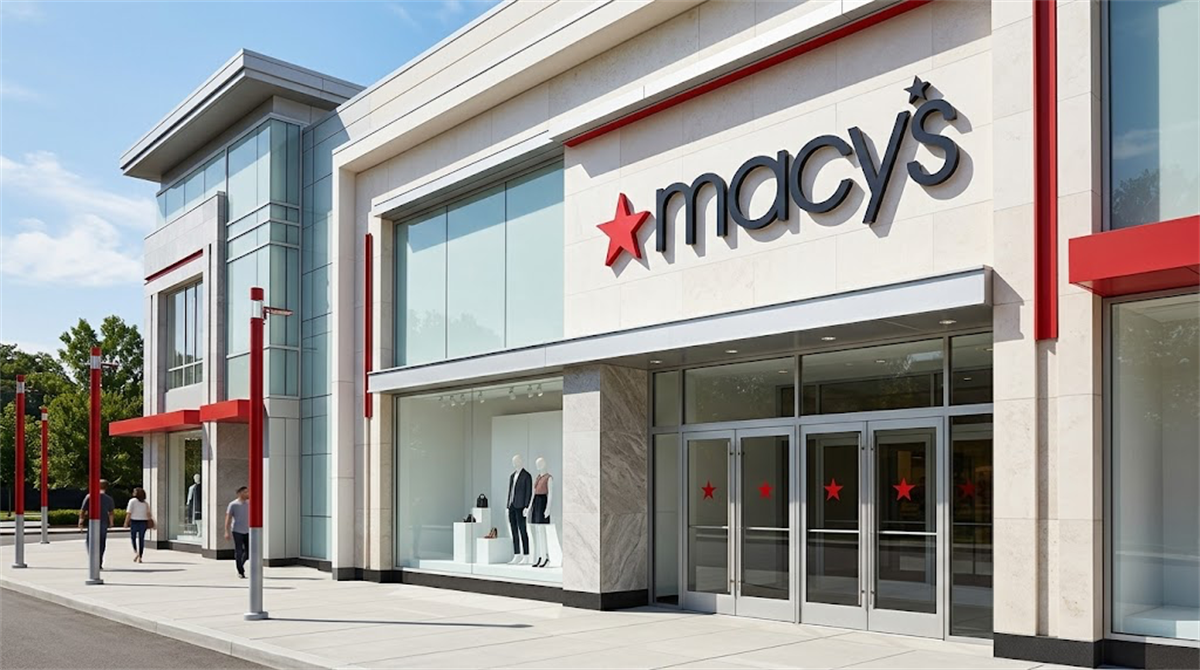
In Q1 2026, investment management behemoth Berkshire Hathaway (NYSE: BRK.B) made a portfolio decision that few saw coming. According to its 13F SEC filing, Berkshire took a new position in Macy’s (NYSE: M)—one of the United States' most iconic department stores.
While Macy’s has closed many locations since its peak in 2015, the firm still remains one of the top names in its industry. In fact, in 2024, Macy’s ranked as the world’s largest department store based on sales, with revenue of approximately $23.7 billion.
However, this would not be immediately apparent from the trajectory of Macy’s stock. Overall, shares are down around 50% from their all-time high reached in 2015. Meanwhile, Macy’s market capitalization has fallen from nearly $25 billion to around $6 billion, losing 75% of its value in 11 years.
Given the massive shift toward e-commerce, Macy’s has become a stock that few investors would think to consider. However, Berkshire clearly sees something in this retail name, investing $55 million. Let’s break down where Macy’s has been and where it is today to try to understand why Berkshire sees value in this stock.
What really happened in Beijing? (Ad)
Trump just returned from Beijing with the most powerful business delegation in American history - Elon Musk, Jensen Huang, Tim Cook, and the CEOs of BlackRock, Goldman Sachs, and CitiBank. The media covered the handshakes. But what was really being negotiated behind closed doors?
Porter Stansberry has connected the Beijing trip to a landmark pact signed by 13 nations in Washington - a pact designed to cut China out of a $3 trillion investment wave tied to the most critical resource of the 21st century. His new documentary exposes the five assets at the center of it all.
Watch the full documentary and see which assets are positioned to benefit
Macy’s Fall From Grace: Stores, Revenue, and Margins Sink
As noted, Macy’s has seen a significant drop in its store count in the span of the past decade or so. In 2016, Macy’s had over 850 total stores. This included over 700 of its flagship Macy's-branded stores, over 50 Bloomingdale's stores, and over 70 Bluemercury stores.
Today, the total store count has fallen to less than 675. The reduction in Macy’s-branded storefronts has driven all of this decline, with there now being fewer than 450 physical locations. Meanwhile, Bloomingdale's and Bluemercury locations have actually increased, with store counts of over 60 and 150, respectively.
Last 12 months' revenue came in at $22.7 billion, down meaningfully since 2024 and down around 19% from its calendar 2014 peak of $28.1 billion. Macy’s operating margin hit a very thin 2.3% in its latest quarter, well down from its level of over 6% during the comparable quarter in 2014.
Considering these metrics, it starts to become much clearer why Macy’s market capitalization has fallen so drastically. However, looking over a shorter timeline, Macy’s has shown improvements in its business—demonstrated by its recently released earnings report.
Macy’s Posts Huge Adjusted EPS Beat, Raises Guidance
Macy’s reported its Q1 2026 earnings in early June—putting up solid numbers on several fronts. (Note that the firm’s fiscal reporting period is slightly behind the calendar period.) The company posted revenue of $4.89 billion, an increase of 1.8% year over year (YOY), and significantly above estimates of $4.61 billion.
Adjusted earnings per share (EPS) rose by 18% YOY to 13 cents, drastically better than anticipated. Analysts expected adjusted EPS of just 2 cents, implying a drop of 82% YOY. The company attributed this outperformance to sales growth that far exceeded expectations.
Comparable sales, which eliminate the effect of store count changes, rose 3% YOY—its strongest growth since 2022. This contrasted with Macy’s comparable sales growth guidance of 0.5% to 1.5% and growth of -2% from a year ago. Additionally, Macy’s achieved its huge adjusted EPS beat despite a 4-cent tariff headwind.
Macy’s also raised its guidance for the full year. The company now expects midpoint comparable sales growth of 0.85%, compared to 0% previously. Its midpoint adjusted EPS guidance now sits at $2.10, up from $2. Its updated adjusted EPS guidance implies a YOY decline of 9.5%.
One of Macy’s key initiatives is to revamp its Macy's-branded stores. This comes as luxury brands Bloomingdale's and Bluemercury are growing much faster, with comparable sales rising 10.2% YOY and 6.4% YOY, respectively. Meanwhile, Macy's-branded comparable sales grew just 1.6% YOY.
To fix this, the company is improving Macy’s stores through its “Reimagine” initiative. Reimagine improvements include altering the mix of merchandise and visual marketing within the stores. The 200 Macy’s locations that have already undergone Reimagine improvements showed better comparable sales growth of 2.4%. This provides evidence that the Reimagine strategy is paying off.
A tiny supplier at the center of Elon's AI infrastructure (Ad)
The upcoming SpaceX IPO - reported for June 12 - is valued at $1.75 trillion. But one analyst says fighting over those shares may be the wrong move.
There's a tiny supplier, just 1/60th the size of SpaceX, sitting at the center of what he calls Elon Musk's 'tollbooth' plan for AI infrastructure. Once SpaceX goes public, Wall Street could expose this under-the-radar vendor to a much wider audience.
Watch the urgent presentation to see this hidden stock before the IPO window closes
Macy’s: A Recovering Company With a Lot Left to Prove
Overall, there are some clear reasons why Macy’s would be attractive to Berkshire. While the company has struggled mightily over the past decade, its recent improvements are real. Still, it is worth noting that Berkshire is not making a big bet on this stock. At $55 million, it represents a tiny fraction of the firm’s overall equity portfolio of over $250 billion. Should Macy’s continue to make progress on its recovery, it is possible that Berkshire could increase its position over time.
Notably, Wall Street analysts are not overly optimistic. The MarketBeat consensus price target of $20.30 implies around 10% downside in shares. The average of two targets updated after the firm’s report is $25, implying moderate upside.
Read More
- A Market Rotation Toward Quality Will Benefit These 3 ETFs
- Europe's new advanced-node fab just picked this Nasdaq company (From Finplays)
- 3 Multi-Metal Stocks for Income and Long-Term Growth
- Altucher: This is My Favorite FREE Starlink Pre-IPO Ticker (From Paradigm Press)
- Nebius Is Up Nearly 175% This Year—Here's What's Driving the Latest Run
- Technology Stocks Just Got Cheaper—Here Are 5 Mega-Caps Worth a Closer Look
- 3 Energy Stocks Built for the AI Power Boom—And Beyond
Stay Ahead of the Market
The best investment opportunities don't wait. Get our research and stock ideas delivered straight to your smartphone—so you never miss a market-moving opportunity. Our text alerts ensure you see timely stock ideas and professional research reports instantly, whether you're in a meeting, commuting, or away from your desk.


