100% overnight gains? (From The Oxford Club)
Key Points
- Kevin O'Leary estimates roughly 65% of data center projects announced in North America may never be built, which could make permitted, powered sites scarce.
- Recent sell-offs in CoreWeave, Applied Digital, and IREN reflect spending fears, but O'Leary sees compute demand running about 3x available capacity.
- O'Leary holds Bitzero Holdings for liquidity alongside private projects in Utah and Alberta, favoring land, power and permits over chips.
- Special Report: Trump’s December Dollar Reset? (From Porter & Company)
Artificial intelligence (AI) infrastructure stocks just learned how quickly spending fears can outrun demand. CoreWeave (NASDAQ: CRWV) fell about 25% in a matter of days during the recent sell-off, while Applied Digital (NASDAQ: APLD) and IREN (NASDAQ: IREN) slid roughly 50% from their summer highs.
The worry is familiar. Data center builders are pouring enormous capital expenditure (CapEx) into new campuses, much of it borrowed, and investors want to know whether that capacity ever pays for itself.
But the market may be counting the wrong thing. The bigger threat to the buildout isn't too much supply. It's how many announced projects quietly never get finished.
If permits, water and power are the real constraints, the sites that clear those hurdles could become far scarcer and far more valuable than the sell-off implies.
Trump's crypto agenda is moving fast this fall (Ad)
This fall, crypto headlines are full of one story... Trump's memecoin, and its contest for a seat at dinner with the President. It's a fun story. It's also a distraction.
Because while the cameras are pointed at the dinner, something far more important is happening in Washington. The regulators this administration put in charge are writing the rules for crypto, right now.
It's the kind of shift that can move far more money than any contest ever will. That's the real power play of this presidency. Not who gets a seat at the table, but who's positioned when the institutional money arrives.
Get my #1 play for the Trump bull run.
2 Growth Verticals Driving the AI Infrastructure Trade
Kevin O'Leary, the businessman known as Mr. Wonderful from Shark Tank, invests in Bitzero Holdings (NASDAQ: AIBZ) and is developing private data center projects in Utah and Alberta. The theme is his largest, at well over 20% of his book.
He splits the opportunity into two verticals. Power is the first, since the economy needs far more grid capacity regardless of AI. Compute and storage capacity is the second, and it runs well beyond AI.
Much of what Amazon.com (NASDAQ: AMZN), Alphabet (NASDAQ: GOOGL), and Microsoft (NASDAQ: MSFT) run through their data centers has nothing to do with AI, per O'Leary. In his view, compute demand sits at roughly 3x available capacity, with no slowdown in sight for three years.
Permits and Power Separate Real Projects From Press Releases
The price tags explain the market's nerves. Tenants that once asked for 250 to 500 megawatts now want at least 1.4 gigawatts, roughly $16 billion from scratch to operations, split about evenly between equity and debt.
Before a tenant rolls in a single rack, the developer needs land, Environmental Protection Agency (EPA) air permits, water rights, dark fiber, and power. Planning alone can run $20 million to $30 million per gigawatt.
Power is the hardest piece. Former crypto miners pivoted to AI because they already had grid connections, but most states now require new projects to bring their own power, usually natural gas run through turbines.
Time is the hidden cost. Internal rate of return (IRR) depends on speed, and a site facing a three-year permit wait cannot produce a return that anyone will finance. Tenants want capacity online by the fourth quarter of 2027, a demand O'Leary calls insatiable.
Here's where it gets interesting. Once the power contract, water permit, and air approval are all signed, a project's value can jump sharply, per O'Leary.
Elon says the ‘S’ word (Ad)
Elon Musk and Sam Altman have sued each other and feuded for years. Yet within days of one another, both men described the same moment in strikingly similar terms: a technological tipping point they call the Singularity.
James Altucher says the idea once belonged to science fiction. Now he connects it to a move Musk could make as soon as October 21, and lays out what both men see coming in a short presentation.
Watch the free presentation now to see what they revealed
Scarcity, Not Oversupply, Could Define the Next 24 Months
The popular bear case says too much capacity is coming, and pricing power could fade once it's built. O'Leary rejects it.
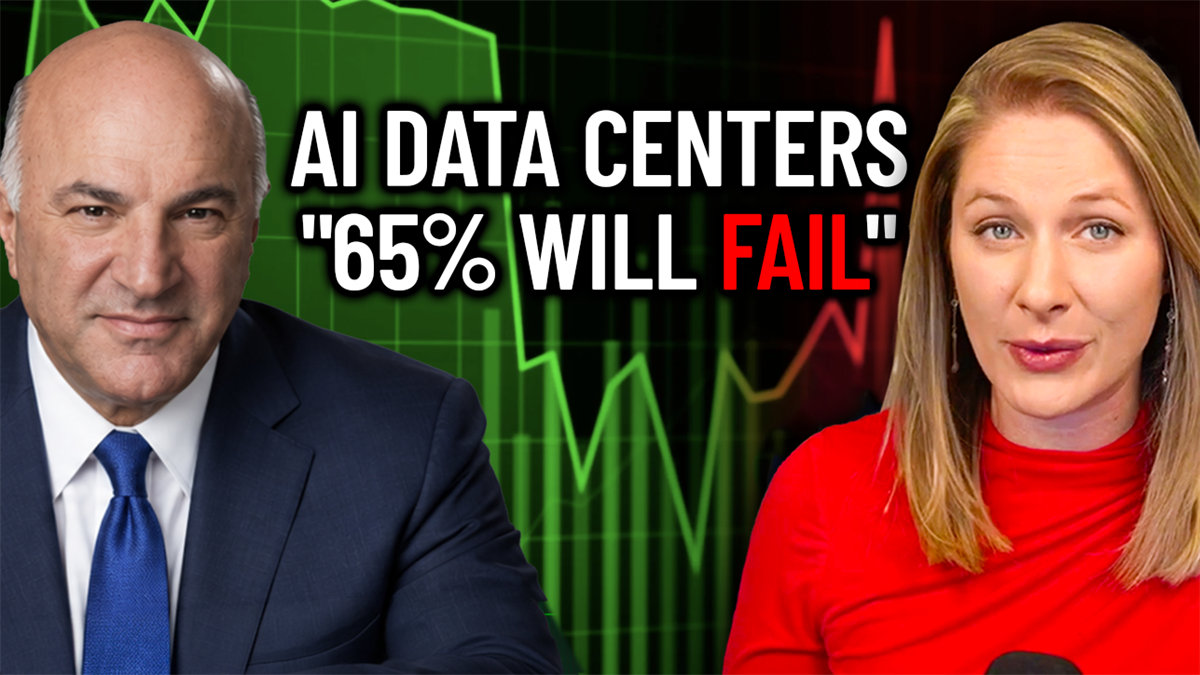
By his estimate, about 65% of data center projects announced across North America in the past two years never get built, sunk by missing water, fiber or power, or by a political moratorium. He expects 60% to 65% could be shut down within 24 months.
Politics is the sharpest risk. O'Leary cites polling showing more than 70% of people oppose a data center in their state, though answers shift when the site sits three miles away and offers jobs paying $150,000. With midterm elections approaching, blocking data centers can win votes.
The oversupply debate assumes announced capacity equals built capacity. O'Leary's math assumes most of it never shows up.
He has not heard of a new project announced in roughly seven months, and his Box Elder County, Utah, site could fund about 30% of the county's budget within 24 months, he estimates. A digital asset bill known as the CLARITY Act could add further compute demand if it passes.
Public Liquidity and Private Projects Can Share 1 Portfolio
O'Leary splits his exposure on purpose. Bitzero, with land, power, and permits in Norway and Finland, gives him liquidity. His Utah and Alberta projects are private.
Location drives cost. Saudi Arabia offers power near one cent per kilowatt-hour, though capital is hard to raise there right now. Norway, Finland, and Alberta come in under six cents, backed by hydro, nuclear, and stranded natural gas.
Long term, he treats data centers like commercial real estate with utility-style cash flows. In climate-controlled storage, he targets 17% to 22% returns and prefers no more than 30% leverage. Investors seeking lower volatility could stick with large caps like Microsoft or Anthropic, if it ever goes public, per O'Leary.
The upside is scarcity. If roughly two-thirds of announced projects fail, permitted and powered capacity becomes the prized asset, and operators already online gain leverage with a short list of about 11 major tenants.
The risk is political and financial. A moratorium can stop any project midway through permitting, and heavy debt leaves little room for delay. Spreading sites across countries lowers that risk without erasing it.
Path to Power Matters More Than Headline Spending
CoreWeave, Applied Digital, IREN, and Bitzero share the same fault line. The market is pricing their spending. What may matter more is whether their sites have power, permits, and tenants in place.
In O'Leary's view, Bitzero's public listing allows it to issue debt and equity, and its operations show it can run a facility profitably—an edge that private projects still chasing permits lack.
The scarcity argument doesn't need every builder to win or AI enthusiasm to hold every quarter. It needs compute demand to stay strong and permitting to stay hard. A sudden wave of newly permitted capacity or a hyperscaler pullback in chip spending would weaken it.
Stay focused on who has signed power and cleared permits, because that's what moves data center stocks once the spending headlines fade.
Recommended Stories
- Tesla's Roadster Reveal Hints at 2 Much Bigger Moves
- Last call for your free 0DTE report (From Profits Run)
- The AI Sell-Off Continues—These 3 Stocks Keep Raising Guidance Anyway
- This biotech’s early trial data shows 63% cancer reduction (From Market Tactic)
- Alcoa Beat Earnings, But Can It Escape the Aluminum Bears?
- Insider Buying Is Rising at These 3 Regional Banks, But the Details Matter
- Illinois Tool Works Faces Headwinds—2 Alternatives Stand Out
Related Video:

Stay Ahead of the Market
The best investment opportunities don't wait. Get our research and stock ideas delivered straight to your smartphone—so you never miss a market-moving opportunity. Our text alerts ensure you see timely stock ideas and professional research reports instantly, whether you're in a meeting, commuting, or away from your desk.


