In partnership with

Can’t Buy the Next AI IPO Yet? Watch 3 Stocks.

Wall Street is preparing for what could become one of the biggest AI IPOs in history. But ordinary investors may have to wait until shares begin publicly trading to participate directly.
Meanwhile, three publicly traded companies could offer exposure to the AI infrastructure and investment boom surrounding Anthropic. Two are familiar names. The third is a lesser-known company that many investors haven't connected to the story.
A new, free briefing reveals all three tickers, potential entry prices, and a bonus fourth company holding thousands of patents tied to the AI race.
See the three stocks before the next wave of attention arrives. Free briefing, no credit card required.
The end of AI data centers coming? (From Chaikin Analytics)
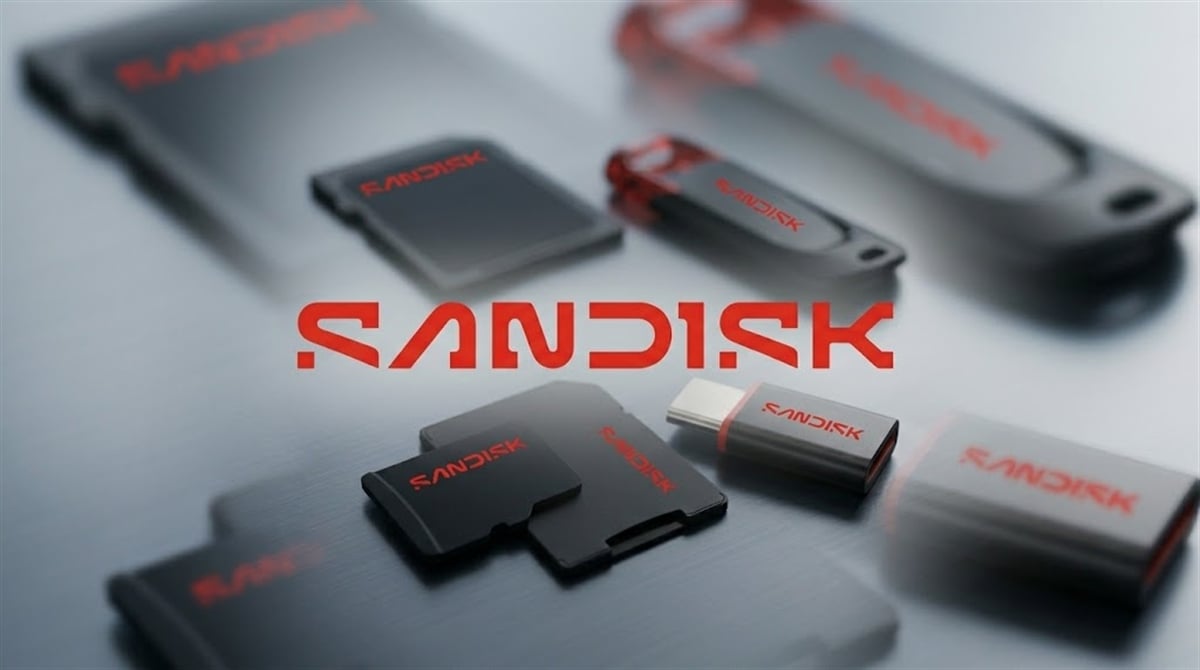
Key Points
- SanDisk shares fell more than 22% on Nov. 5, leaving the stock roughly 65% below its June peak despite strong fiscal Q1 earnings.
- The sell-off reflects investor doubt that SanDisk's extraordinary gross margins above 85%, driven by hot NAND pricing, can be sustained long-term.
- Whether SanDisk is a bargain or value trap depends on if current enterprise demand reflects a durable trend or a cyclical peak.
- Special Report: Trump, Schiff and Dalio all point to the same warning sign (From USA Capital Gold)
When a stock sheds almost two-thirds of its value in a matter of months, the instinct is to go hunting for a bargain. Sandisk Corp. (NASDAQ: SNDK), the flash-memory and data-storage specialist, is dangling exactly that temptation in front of investors.
The stock finished down more than 22% on Nov. 5 alone, a single-session rout that dragged the shares to roughly 65% below their June peak. Its relative strength index has now sunk to its lowest reading since April 2025, the deeply oversold reading that usually has contrarians circling.
For a company once crowned among the biggest winners of the AI boom, that’s a staggering fall from grace. The pain hasn’t been Sandisk’s alone, either: the sell-off has spread across the entire AI trade, with the tech-heavy NASDAQ index suffering its worst day in 19 months on Nov. 5, down around 5.5%.
So what happened to the market’s favorite memory stock, and is this the moment brave investors have been waiting for? The answer starts with what didn’t cause the crash.
Today's stock pick is on me (Ad)
Elon can't build his satellite network without one key supplier, and he's paid this company since 2012.
His plan for 1,000,000 satellites could multiply that bill significantly, putting this overlooked stock back in focus.
Dylan has circled December 8th as a key date for this pick.
Claim today's free stock pick before December 8th
The Sell-Off Isn't About Earnings
Despite the latest drop coming just a week after the company’s Q1 fiscal year 2027 earnings, they can’t be blamed here. Sandisk’s late-October results were, by almost any measure, spectacular. Revenue came in above $11 billion, up 377.5% on a year earlier, with gross margins north of 85% and billions of dollars flowing back to shareholders through buybacks.
Management then guided the current quarter higher rather than lower, hardly the posture of a company bracing for a collapse. On the headline numbers, this was a business performing about as well as it ever has. In other words, the market looked straight past a blockbuster quarter and fixated on a very different question: how long can numbers this good possibly last?
Why the Market Stopped Believing the Margins
That question cuts to the heart of the bear case. Gross margins around 85% are extraordinary for a memory company, and they exist largely because NAND pricing has been running so hot. The worry is simple: margins like these tend to mark a peak, not a plateau.
The stock’s valuation only sharpens the anxiety. After the latest leg down in the crash, Sandisk trades at a price-to-earnings ratio of about 6.5x on trailing earnings. That sounds absurdly cheap—until you realize it’s only true if today’s bumper profits last. If those earnings are sitting near a cyclical top, that low multiple is a mirage rather than a margin of safety.
To be sure, the bulls have a real rebuttal. Sandisk’s data-center business is booming, with revenue up more than 60% sequentially, and a chunk of its future output is already locked in under long-term supply agreements covering roughly half of fiscal 2027 NAND bit output. That’s real visibility, rather than wishful thinking, but the market is obviously asking for more reassurance.
A free stock pick, from me to you (Ad)
Elon's paid this chip supplier since 2012. When NVIDIA tried to buy the company, he fought the deal.
Without its chip, his AI satellites don't fly. Now he wants 1,000,000 of them in orbit, 100 times what's up there today, and every one pays this company a royalty.
Dylan believes shares could react by December 8th.
Claim this free stock pick before the December 8 deadline today
The NAND Cycle Is the Real Swing Factor
Underneath the stock’s potential sits the current memory cycle, and here the picture splits in two. Enterprise and data-center demand, powered by AI, remains strong enough to keep pushing specialist pricing higher. Consumer demand, by contrast, is buckling as those higher prices get passed through, with Sandisk’s consumer revenue falling nearly 30% from the previous quarter.
That divergence leaves the company leaning heavily on hyperscaler spending, which is a wonderful place to be until it isn’t. Any moderation in AI capital budgets, or a wave of fresh supply as rival NAND producers ramp up capacity, could unwind the very pricing that makes those eye-wateringly high margins possible.
This is why the sell-off is as much macro as micro. Sandisk slid alongside the broader AI trade as investors suddenly questioned whether the current boom is durable or merely cyclical, and a stock priced for flawless execution had the most to give back.
So Is Sandisk a Bargain or a Value Trap?
The honest answer is that it hinges almost entirely on what you think about one variable: whether Sandisk’s current earning power is a new structural reality or the high-water mark of a cycle. If enterprise demand holds and prices only drift lower gradually, the stock looks seriously mispriced at these levels.
If, on the other hand, margins normalize and consumer weakness spreads, then that tempting low multiple is exactly the trap it looks too good to be. Anyone betting on a bounce here is really making one call above all others: that this is the strongest phase of the cycle, not its final act. For now, the chart screams bargain while the cycle whispers caution, and only the next few quarters of NAND pricing data will settle which signal was right.
Featured Stories
- Dutch Bros Gave Wall Street What It Wanted, So Why Did the Stock Crater?
- New executive order reshapes access to 401k investments (From Brownstone Research)
- Astera Labs Just Crushed Earnings—So Why Are Analysts Cutting Price Targets?
- Why retirees are watching Trump's 1929 comment closely (From USA Capital Gold)
- IonQ's Record Revenue Includes a Big SkyWater Boost: Does That Change the Story?
- Airbnb Defied a Brutal Tech Sell-Off, But Can Its Post-Earnings Rally Last?
- MarketBeat Week in Review – 11/2 - 11/6

Stay Ahead of the Market
The best investment opportunities don't wait. Get our research and stock ideas delivered straight to your smartphone—so you never miss a market-moving opportunity. Our text alerts ensure you see timely stock ideas and professional research reports instantly, whether you're in a meeting, commuting, or away from your desk.


