DOJ Admits It In Court—Your Cash Can Be Seized Without Warning (From Priority Gold)
Key Points
- Disney’s licensing agreement with Netflix reflects a more flexible approach to streaming exclusivity while keeping most branded content on its own platforms.
- Netflix’s distribution scale and strong cash generation make it an increasingly valuable licensing partner for major content owners.
- Disney is balancing declining linear television economics, significant debt and profitable streaming operations as it looks for additional ways to monetize its catalog.
- Special Report: Only ONE stock survived Karim’s test (From Monument Traders Alliance)
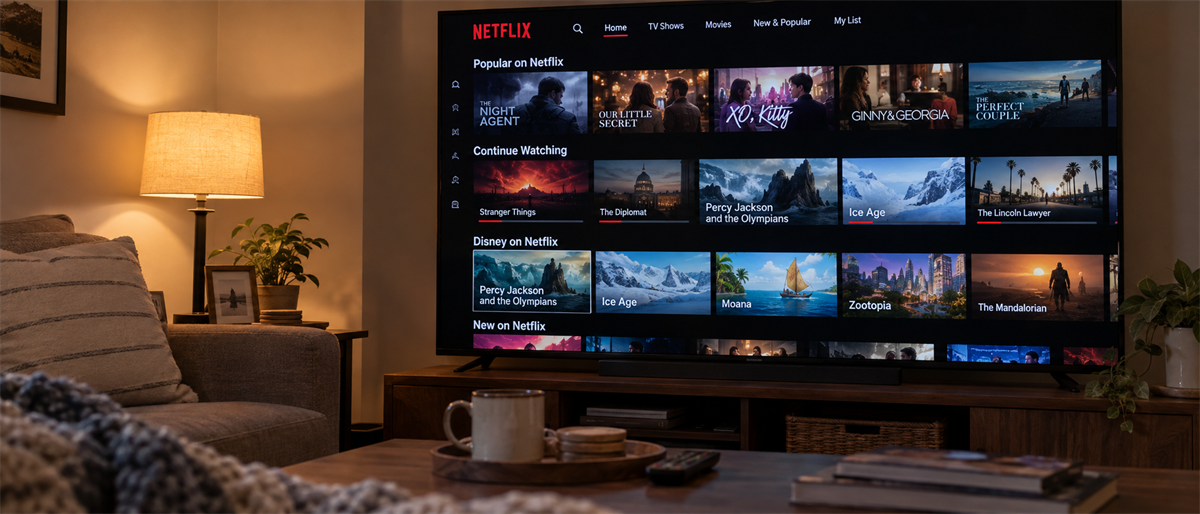
The Walt Disney Company (NYSE: DIS) recently executed a content licensing agreement to syndicate intellectual property to Netflix, Inc. (NASDAQ: NFLX). Selectively opening its proprietary ecosystem to share titles like "Percy Jackson and the Olympians" alongside legacy "Ice Age" films serves as a structural pivot. Disney is signaling that strict streaming exclusivity is not always the most financially efficient model. Facing pressure from declining legacy television networks and a heavy balance sheet, legacy media entities are retreating to historical roles as arms dealers. This transition formally cements Netflix as the apex digital aggregator, operating with clear free cash flow dynamics and pricing power.
A Little Known Explorer Sits Near Major Gold Deposits (Ad)
Barrick Mining has spent decades building one of the world's great gold districts in Nevada, anchored by Fourmile, Goldrush, and Cortez Hills, a region that could hold as much as 60 million ounces of gold.
Bordering Fourmile and less than a mile from Goldrush sits a little-known explorer now moving from historical data toward active exploration, setting targets and preparing for a maiden drilling program.
With gold trading near record highs, this could be a pivotal stage for an overlooked name in the district.
See why this overlooked gold explorer could be entering its most important stage
Breaching the Castle: Disney Abandons the Walled Garden
Friday, Oct. 2, 2026, Disney and Netflix announced a content licensing agreement transferring streaming rights for several high-profile properties to Netflix. The slate includes the first two seasons of the Disney+ original series "Percy Jackson and the Olympians," all five "Ice Age" films, and select Disney and Pixar titles. Rather than a total asset liquidation, the agreement operates partly on a short-term promotional framework. Disney grants Netflix titles for temporary three-month windows to reach its audience of approximately 325 million global subscribers.
The timing directly precedes the release of exclusive installments on Disney-owned properties, such as the November premiere of the third season of "Percy Jackson" on Disney+ and the February 2027 theatrical release of the next "Ice Age" installment. Under CEO Josh D'Amaro, Disney can use Netflix as a top-of-funnel marketing engine. The transaction generates immediate licensing revenue while driving broad audience awareness for Disney's exclusive sequels.
This unwinds years of strict platform exclusivity. During the initial phases of the streaming transition, media conglomerates hoarded their intellectual property to drive subscriber growth at all costs. Sinking billions into proprietary platforms was viewed as the only path to survival. Moving away from strict exclusivity signals that legacy studios increasingly see value in external distribution scale alongside their own platforms. Renting select content to a primary competitor is a pragmatic recognition that licensing revenue can sometimes outweigh the benefits of keeping every title exclusive.
The Debt Moat: Linear Decay Forces Disney's Hand
The underlying forces driving this syndication strategy stem from deterioration in legacy television networks. Operating income across Disney's Linear Networks fell about 20% year over year. Relentless cord-cutting and persistent pressure on television advertising have compressed margins, forcing management to look outside its proprietary platforms to monetize existing assets. Linear television historically functioned as a reliable cash engine that funded speculative growth initiatives, and its accelerated decline removes a critical safety net.
Compounding linear decay is Disney's restrictive balance sheet. Disney carries approximately $46 billion in total debt. Servicing this obligation while funding capital-intensive theme park expansions makes the cash-burning exclusive streaming model difficult to sustain. Prioritizing subscriber acquisition over profitability is a luxury that media companies carrying significant debt can no longer afford. Debt acts as a gravitational pull on corporate strategy, demanding predictable cash generation to appease credit rating agencies and dividend-seeking shareholders.
The necessity to generate additional cash flow pushes the company back toward traditional syndication economics. By monetizing older catalog titles through an external distributor, management can generate incremental licensing revenue without incurring additional production or customer acquisition costs. This is not a sign of operational failure but rather a return to the arms-dealer business model that originally made Hollywood studios so profitable in the late 20th century.
Why The Biggest Names in AI Are Heading To The Arctic (Ad)
Google contracted over 12 GW of energy last year and just announced a 15 billion dollar AI infrastructure investment in Finland. Cerebras followed with plans for a 165 MW data center worth up to 1.7 billion euros.
One small Nasdaq-listed company built its Nordic footprint before this wave hit, with up to 190 MW of capacity approaching ready-for-service status in 2027 to early 2028. Recent long-term data center deals have valued capacity at 1.7 to 2 million dollars per MW annually.
See why this overlooked company could be next in the AI infrastructure spotlight.
See why this overlooked company could be next in the spotlight
The Margin Chasm: Netflix's Cash Flow Supremacy
Financial metrics reveal a wide disparity in cash generation and profitability between the two companies. Netflix expects to generate $12.5 billion in free cash flow in 2026, up from its previous $11 billion forecast. The company's operating margins are expanding past 32%, with trailing net margins standing at about 28% and return on equity at roughly 40%.
This liquidity profile allows Netflix to absorb licensing premiums easily while reinforcing its library and cementing its status as a major aggregator for digital entertainment. Netflix can amortize the cost of acquiring licensed content across a subscriber base far larger than any competitor, mathematically ensuring a higher return on investment per title.
In contrast, Disney operates with a net margin of 8.7% and a return on equity of around 9.9%. The strategic pivot to license content provides another way to monetize its catalog as the company works to improve profitability. Keeping most Disney-branded titles exclusive protects Disney+'s core value proposition, while syndicating secondary properties lets Disney extract value from sunk costs.
The move trades some exclusivity for immediate tangible licensing revenue, prioritizing balance sheet health over raw subscriber metrics. For years, Wall Street rewarded media companies solely for subscriber additions. The market environment has shifted toward value profitability and free cash flow yields. Disney's management is adjusting its operational framework to meet these current market realities.
Crown Jewels: Trading the Capitulation
The content licensing agreement highlights a broader shift in digital media distribution. Netflix has built an economic moat through superior free cash flow and enormous distribution scale. Netflix's stock currently trades near $68, with a forward price-to-earnings ratio of about 19 and a PEG ratio of 0.95. These valuation metrics indicate a balanced price relative to expected growth. Institutional backing remains high at just over 80%, providing a stable foundation for the equity.
Disney's structural pivot does not classify it as a distressed asset, but rather a mature company returning to foundational economics. Disney trades at a forward price-to-earnings ratio of nearly 15 with a well-covered 1.45% dividend yield; the company is executing a measured margin-expansion strategy. Short interest sits at just 1.14%, reflecting limited broader market pessimism. Insider activity at Disney has also been limited, with MarketBeat reporting two insiders selling shares over the past 12 months and no insider purchases.
Growth-oriented investors may view Netflix as a core growth holding positioned to benefit from ongoing industry licensing shifts and its substantial pricing power. Conversely, investors seeking steady income might look to legacy media entities like Disney, which are increasingly prioritizing free cash flow and dividend sustainability over aggressive digital expansion. Cautious investors may prefer to wait for stabilization in linear advertising revenues before taking a position in traditional entertainment equities.
Featured Articles
- Skydance Just Became a Media Giant—With an $80 Billion Debt Load
- Nvidia pours 7 billion into a light speed AI breakthrough (From Brownstone Research)
- Could Velo3D Be the Next Defense Buyout Target?
- My best find since +2,200% Rolls Royce (From Monument Traders Alliance)
- Penguin Solutions Is Soaring as AI Memory Demand Explodes
- Alphabet’s Chart Is Coiling—and the Fundamentals May Be Ready to Back It Up
- Morgan Stanley Is Bullish on Apple—But With a Catch

Stay Ahead of the Market
The best investment opportunities don't wait. Get our research and stock ideas delivered straight to your smartphone—so you never miss a market-moving opportunity. Our text alerts ensure you see timely stock ideas and professional research reports instantly, whether you're in a meeting, commuting, or away from your desk.


