Starlink's $100 Billion IPO: Your Chance to Invest Early (From Paradigm Press)
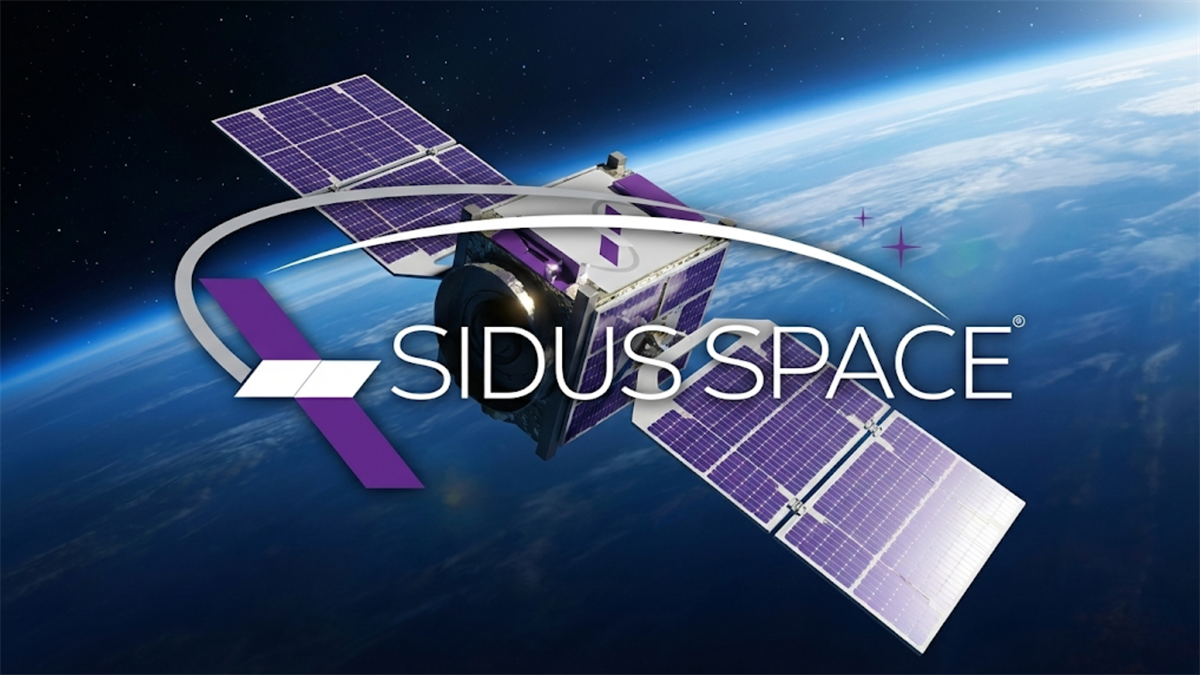
Key Takeaways
- Sidus Space was selected as an awardee of the massive, scalable homeland defense contract, which validates its proprietary satellite technology.
- The company leverages its vertically integrated manufacturing and onboard artificial intelligence to provide real-time data for national security.
- The shift toward proliferated low-earth-orbit constellations creates a significant opportunity for agile manufacturers capable of delivering rapid solutions.
On Dec. 22, 2025, the aerospace sector witnessed a volatility event that captured the attention of retail and institutional investors alike. Sidus Space (NASDAQ: SIDU), a company specializing in Space-as-a-Service, saw its stock price appreciate by over 100% during intraday trading. The trading volume was historic for the micro-cap firm, with over 377 million shares changing hands in a single session.
The engine behind this move was a headline number that demands attention: $151 billion. Sidus Space was officially named an awardee on the Missile Defense Agency’s (MDA) SHIELD contract. For a company with a market capitalization hovering around $60 million, gaining access to a defense program of this magnitude acts as a massive validation of its business model.
However, the laws of financial gravity applied almost immediately. Following the market close, the company announced a proposed public offering of Class A common stock. This news sent shares tumbling approximately 20% in after-hours trading. This rapid sequence of events, an astronomical contract win followed by an immediate capital raise, presents a complex picture. Investors must now analyze whether the long-term value of the Golden Dome defense strategy outweighs the short-term costs of shareholder dilution.
Best $19 you’ll spend this year. (Ad)
A former hedge fund manager known for cutting through market noise is briefly opening access to his flagship trading strategy. In a short demo, he explains how his “One Ticker” approach works — and how readers can access the full service for a year at a steep discount.
The SHIELD Strategy: Why Space Is Critical
To understand the investment thesis for Sidus Space, you must first understand the customer’s problem. The Missile Defense Agency (MDA) is currently building the Golden Dome, a comprehensive, multi-layered defense strategy designed to protect the United States and its allies from advanced threats, such as modern hypersonic missiles that move too fast and fly too low for traditional ground-based radar to track effectively.
The solution is the SHIELD program (Scalable Homeland Innovative Enterprise Layered Defense). This initiative moves the eyes of the defense network into orbit. However, the military is no longer looking for billion-dollar, school-bus-sized satellites that take a decade to build. They need speed, agility, and redundancy.
The new defense architecture relies on Proliferated LEO (Low Earth Orbit). This strategy involves launching swarms of smaller, cost-effective satellites. If an adversary disables one satellite, the network remains operational. This shift creates a massive opportunity for agile manufacturers who can deliver hardware quickly.
Sidus Space fits this specific requirement through its vertically integrated manufacturing model. Operating out of Cape Canaveral, the company designs and builds its own satellites in-house. This allows them to rapidly adapt to MDA requirements, offering a Space-as-a-Service model that aligns perfectly with the government's need for responsive space capabilities.
Edge AI: Processing Intel at Mach Speed
Winning a seat on the SHIELD contract requires more than just a low price; it requires flight-proven technology. Sidus Space secured this win on the back of its flagship platform, the LizzieSat™. This is not a standard off-the-shelf component; it is a hybrid, 3D-printed satellite designed for multi-mission versatility.
The critical differentiator for Sidus in a missile defense context is its computing power. Tracking hypersonic threats requires near-instantaneous data processing. Legacy satellites often act as data mules, collecting raw information and sending massive files back to Earth for analysis. This creates dangerous latency.
Sidus solves this with its FeatherEdge™ platform. This onboard system utilizes artificial intelligence (AI) to process data directly in space, a concept known as Edge AI.
- On-Orbit Processing: The satellite analyzes sensor data in real-time.
- Actionable Intelligence: Instead of sending terabytes of noise, the satellite sends only the critical target data to commanders on the ground.
- Speed: This drastically reduces the sensor-to-shooter timeline, a key metric for the MDA.
This capability is operational today. In December 2025, Sidus announced the successful bus-level commissioning of its LizzieSat-3 (LS-3). This technical milestone proved that their autonomous systems function correctly in the vacuum of space, likely serving as the final proof point needed to secure the SHIELD award.
The McDonald's Secret (Ad)
Smart investors didn't buy road construction stocks. They asked a different question: "Who benefits from all those cars on the road?"
The answer was a small hamburger chain planting golden arches at every exit.
And McDonald's delivered a 38,581% gain in just two decades.
It's happening again.
Click here to discover how you could get in for less than $20.
The IDIQ Model: A Hunting License Explained
While the $151 billion contract ceiling is a bullish headline, investors must contextualize it with the company’s current financial health and contract structure. The SHIELD award is an Indefinite Delivery, Indefinite Quantity (IDIQ) contract.
- The Ceiling: $151 billion is the total amount the MDA can spend across all awardees through 2035.
- The Competition: Sidus is one of approximately 2,100 vendors in this pool.
- The Mechanism: Sidus has a license to hunt. They must now compete for individual task orders.
Winning these task orders requires capital. Manufacturing satellites, integrating sensors, and securing launch slots is an expensive endeavor. A review of the company's third-quarter 2025 financial report reveals why the capital raise was necessary.
- Cash Position: The company held $12.7 million in cash as of Sept. 30, 2025.
- Net Loss: The company reported a net loss of $6 million for the quarter.
- Revenue Pivot: Revenue declined 31% year-over-year as the company pivoted away from legacy engineering services to focus on its satellite constellation.
With a high burn rate and a need to fund the production of LizzieSat-4 and LizzieSat-5 (planned for late 2026), the company’s cash runway was tight. The announcement of the proposed public offering immediately following the stock surge is a strategic move by management. By leveraging high trading volume and investor interest, they can raise the necessary funds to execute the SHIELD contract. While this dilutes existing shareholders and helps explain the after-hours price drop, it provides the fuel needed to convert the IDIQ license into actual revenue.
A Speculative Defense Asset
Sidus Space has effectively graduated from a speculative concept stock to a contracted partner within the United States national defense architecture. The selection for the SHIELD program confirms that its technology is not only viable but essential for future defense strategies.
However, the investment thesis carries clear risks. The company is currently unprofitable and relies on external capital to fund its operations, leading to volatility and dilution. Investors looking at Sidus Space are betting that the company can successfully capture enough task orders from the $151 billion pool to achieve profitability before further capital is needed. For those with a higher risk tolerance, Sidus represents one of the few pure-play ways to invest in the Golden Dome missile defense narrative.
Further Reading
- Vertical Aerospace Traded a Delay for a Major Advantage
- What Expenses Can Be Deducted From Capital Gains Tax? (From SmartAsset)
- Alphabet’s Pullback After a Big Year—Is This the Dip to Buy?
- (INSIDE) A warning sign I’ve only seen before the biggest market crashes (From ProsperityPub)
- Darden Restaurants, Inc.: This is What a Strong Signal Looks Like
- Amazon Looks Stuck—So Why Do Analysts Keep Calling for $300?
- Carnival’s Dividend Return Marks the End of Survival Mode


