Trump's new AI tirade hurting GOP? (From Stansberry Research)
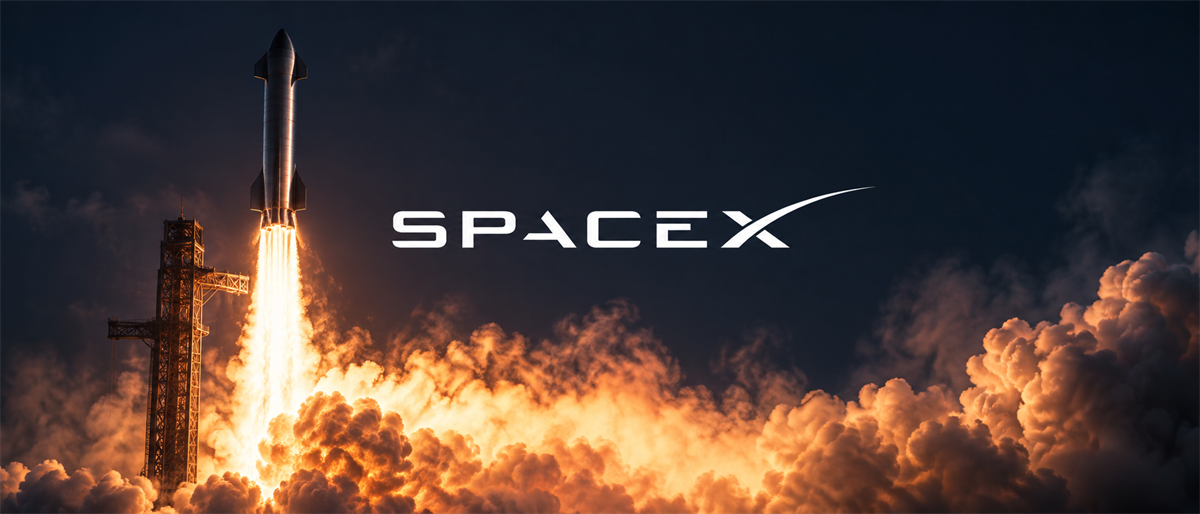
Key Points
- Elon Musk says he is highly confident SpaceX will begin launching NVIDIA's advanced AI computers into orbit as early as 2027.
- SpaceX would adapt Starlink satellites with NVIDIA chips and solar power, aiming for larger deployments by 2028 and eventually up to a million satellites.
- Significant obstacles like heat dissipation, radiation shielding, and repair logistics mean analysts do not expect meaningful revenue before around 2029.
- Special Report: The energy story near the Grand Canyon (From Behind the Markets)
Some corporate ambitions are so audacious they sound like science fiction, and Elon Musk's latest may be one of them. It was reported earlier this week that he's “highly confident” his rocket company, SpaceX (NASDAQ: SPCX), will begin launching NVIDIA Corporation's (NASDAQ: NVDA) most advanced AI computers into orbit as early as next year. If it happens, this will be the first step toward a future where artificial intelligence is powered not by data centers on Earth, but by satellites circling above it.
The plan itself is not new, but Musk's confidence in a 2027 start is, and that near-term timing is what makes it worth a fresh look. It sounds outlandish, and in many ways it is. Yet it ties two of the market's most closely watched companies to a wholly new frontier for computing, and for two stocks that could each use a fresh catalyst, this is one to watch.
Both have had a decent run of late, with SpaceX shares up around 45% since the start of August and NVIDIA climbing roughly 10% over the same stretch, though both are roughly flat over the past month.
A bold new growth story could give each of them a reason to break out, which is precisely why this orbital plan, however far-fetched, deserves a closer look.
The REAL Reason Trump is Invading Iran (Ad)
For a moment…
Forget about Trump’s ties to Israel.
Forget about reports of Iran’s nuclear program.
Because my research has led me to believe we’re risking World War 3 with Iran for a completely different reason.
Click here to find out what it is.
What Musk Is Actually Proposing
Strip away the theatrics, and Musk’s idea has a certain logic. AI data centers are voracious consumers of electricity, water, and land, and they're starting to hit real constraints on Earth, from strained national power grids to local planning battles. Space, his argument goes, offers a way around all of it: limitless room and solar power, and no neighbors to object.
The plan is for SpaceX to adapt the satellites it already builds for its Starlink network, swapping their communications gear for NVIDIA's computing hardware and adding solar panels to power it. Musk has spoken of an initial launch late next year, with larger deployments following in 2028. He has also floated the staggering ambition of a constellation of up to a million compute-carrying satellites.
Crucially, this is much more than just a SpaceX story. NVIDIA has been named the exclusive supplier of the chips that would think in orbit, so any buildout, however far off, would flow straight into fresh demand for its hardware. And with NVIDIA already holding a sizable stake in SpaceX, its interest runs deeper than a typical supplier's, giving its own shareholders a real reason to follow where this plan goes next.
The Case for Getting Excited
For the bulls, much of the appeal comes from what SpaceX already owns. It builds the rockets, makes the satellites, and runs the Starlink network, and all of that expensive infrastructure is already up and running. That means it could add a whole new business, orbital computing, on top of assets it has already paid for, at a marginal cost no rival starting from scratch could hope to match.
The upside for NVIDIA is simpler, and arguably even bigger. Any large-scale orbital buildout would mean a vast new source of demand for its chips, on top of the already insatiable appetite from earthbound data centers. That's what makes Musk’s idea so tantalizing for investors: two companies at the cutting edge of their fields, potentially joining forces to open a market that doesn't yet exist.
CODE RED: AI Meltdown Imminent? (Ad)
After correctly predicting the 2008 and 2020 stock market meltdowns, I believe this AI company is about to trigger the next crash. The research firm Bernstein Research said this AI company has the power to crash the global economy for a decade, the CEO just issued a CODE RED in an internal memo warning employees they're dealing with a critical situation, and another company executive even implied they might need a government bailout. The last time I saw something like this was in 2008 when I predicted a stock market meltdown just three weeks before Lehman went under.
See the five simple steps to prepare before it's too late
Why the Skeptics Are Right to Be Wary
Before getting carried away, however, a heavy dose of realism is in order, because the obstacles are formidable. Chief among them is the simple question of heat. In the vacuum of space, there is no air to carry warmth away, so cooling powerful computers would be seriously difficult, with one estimate suggesting a single orbital data center might need radiators covering millions of square feet.
Then there's everything else: shielding delicate hardware from radiation, moving huge volumes of data between orbit and the ground, the near-impossibility of sending a human engineer up to fix a broken machine, and the thorny questions of regulation and insurance for a business with no track record. None of these is trivial, and together they are daunting.
Most important of all is timing. Even the more bullish analysts don't expect this to generate meaningful revenue for years, with some penciling in the first serious orbital capacity no earlier than around 2029. The 2027 and 2028 milestones are best seen as feasibility tests, not the moment the tills start ringing.
A Catalyst to Watch, Not to Bank On
For now, the near-term upside for both companies remains firmly earth-bound, with NVIDIA's fortunes tied to the ongoing boom in old-fashioned data centers and SpaceX's to its launch and satellite businesses.
Still, that doesn't make the idea worthless. As a long-term catalyst, it's one of the more imaginative stories that’s hit the headlines this year, and if the early launches succeed, it could quickly shift from novelty to real opportunity. In other words, it's a moonshot worth tracking, but one that has to clear the launchpad before it can move either stock for real.
Read More
- NVIDIA Just Named AI's Next Bottleneck—And These 3 Stocks Sit Right In It
- Free today: My 7-point options checklist (From Profits Run)
- Gold Has Gone Sideways, But These 3 Stocks Haven’t
- Here’s Why Trump Won’t End The Iran War (From Banyan Hill Publishing)
- The AI Bottleneck Is Not Chips Anymore and 3 Pipeline Stocks Are Cashing In
- These 3 Stocks Under $20 Have Wall Street Looking Past the Share Price
- These 3 Stocks Sit at the Center of NVIDIA’s Cybersecurity Push

Stay Ahead of the Market
The best investment opportunities don't wait. Get our research and stock ideas delivered straight to your smartphone—so you never miss a market-moving opportunity. Our text alerts ensure you see timely stock ideas and professional research reports instantly, whether you're in a meeting, commuting, or away from your desk.


